
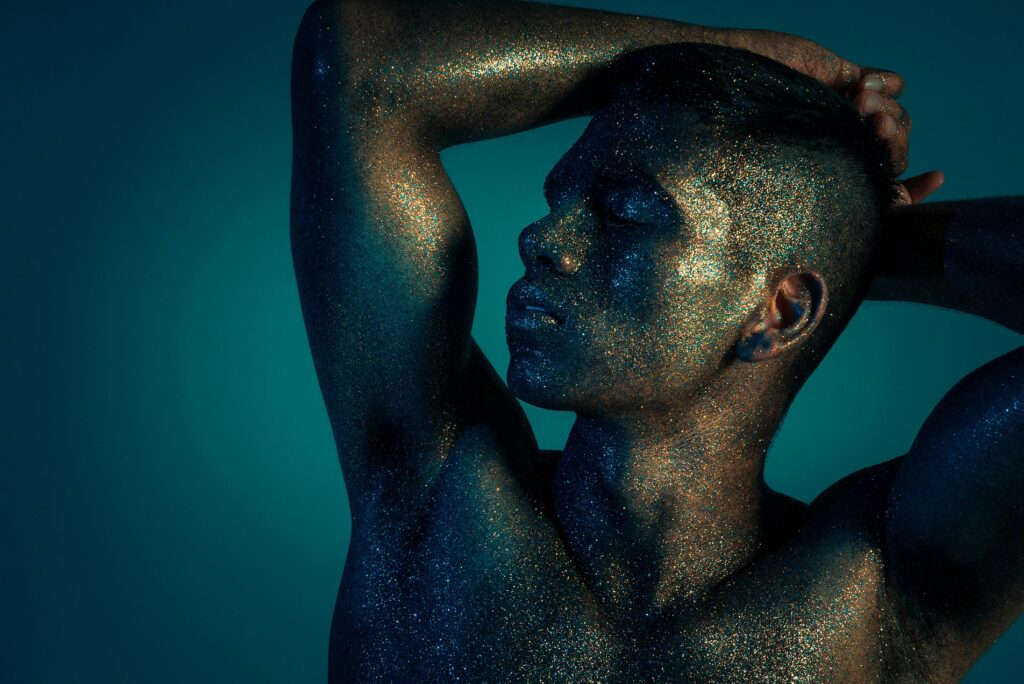
Perhaps no deity in the Feri Tradition is as well known, or as deeply loved, as Dian Y Glas, the Blue God.
Widely held to be the patron of our Tradition, he has called numerous Feri initiates to the path.
For many, this call first came in the second chapter of Starhawk’s groundbreaking book, The Spiral Dance.
Here, she described the Blue God as “the gentle, laughing God of love” — a divinity who embodied a radically different kind of masculinity than the traditional Horned God.
This tender, soft description spoke to many of us — especially gay men — who longed for a deity that we could relate to.
But just who is this magnetic, nebulous being, who you would be hard-pressed to find in any dictionary of gods and spirits?
First-born of the Star Goddess
While Nimue is often said to be the Star Goddess’s first reflection, the Blue God is considered to be her first-born child.
He is also sometimes said to represent the union of the Divine Twins, when they take the forms of Serpent and Dove. As such, he becomes the “Winged Serpent” — part earthly, part heavenly, and wholly divine.
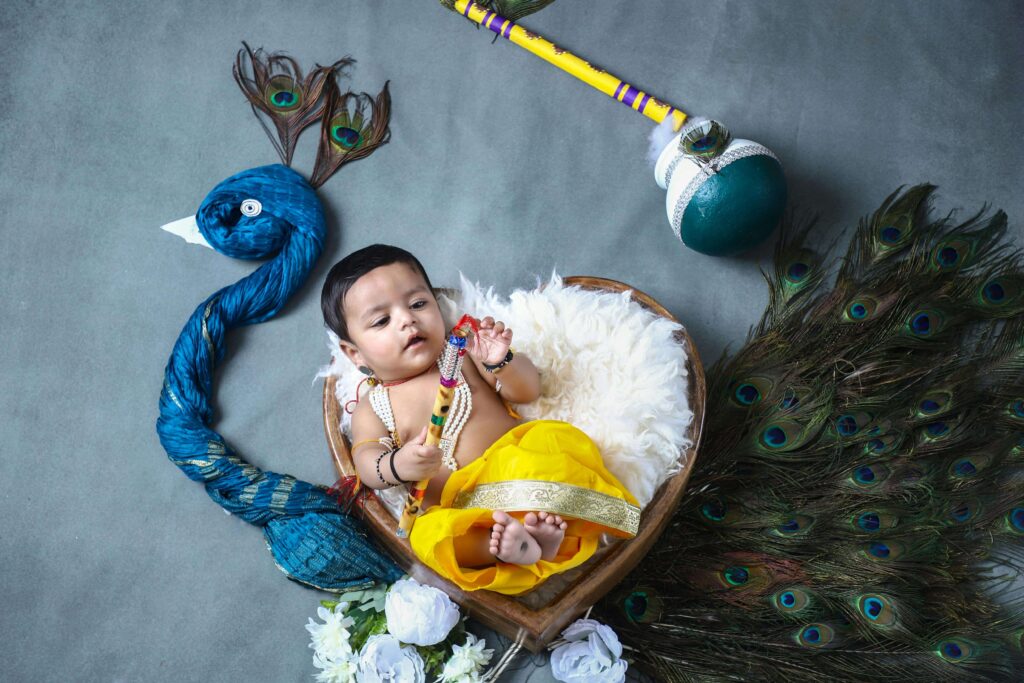
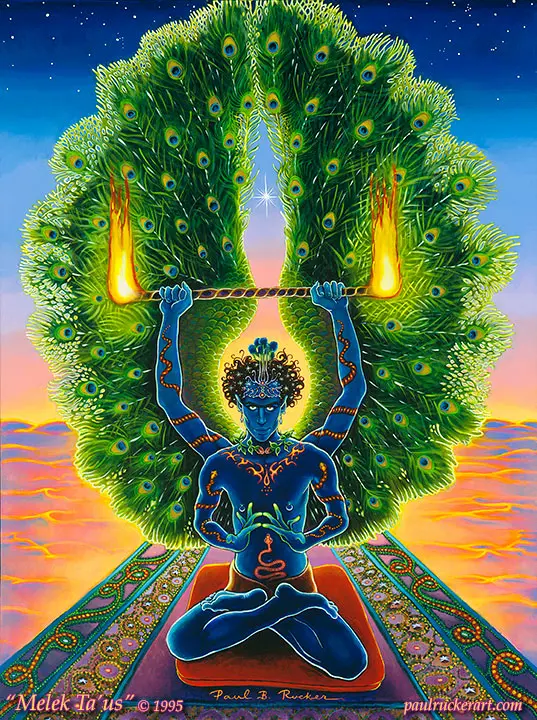
Traditional Feri lore describes Dian Y Glas as a blue-skinned, ithyphallic youth with small, budding breasts. He is pictured with a green snake around his neck and peacock feathers in his hair.
There is a softness about Dian Y Glas, and the adolescent innocence of someone who hasn’t yet had their heart broken. His vision of the world is untainted by experience, and in this sense, he embodies the Zen Buddhist concept of “beginner’s mind.”
Much like Nimue, Dian Y Glas is seen as a springtime god, and is associated with life-bringing rains and freshwater springs.
He is the god of the beauty, love, sexual awakening, and passion, and for this reason, he is sometimes syncretized with the Greek god Eros.
World-wide connections
While blue skin is not exactly common among deities, Dian Y Glas is not the only celestial being with this trait.
In Ancient Egypt, Hapi, the god of the Nile, regularly appeared with blue skin. Just like the Blue God, he was also seen as an androgynous figure, and was depicted with a ceremonial beard, breasts, and a pregnant belly.
Historians believe these feminine traits were symbolic of the fertility of the Nile, and the annual floods that the Egyptians relied on for abundant harvests.
The similarities between Hapi and Dian Y Glas are truly astonishing, and I see a strong connection between the two.
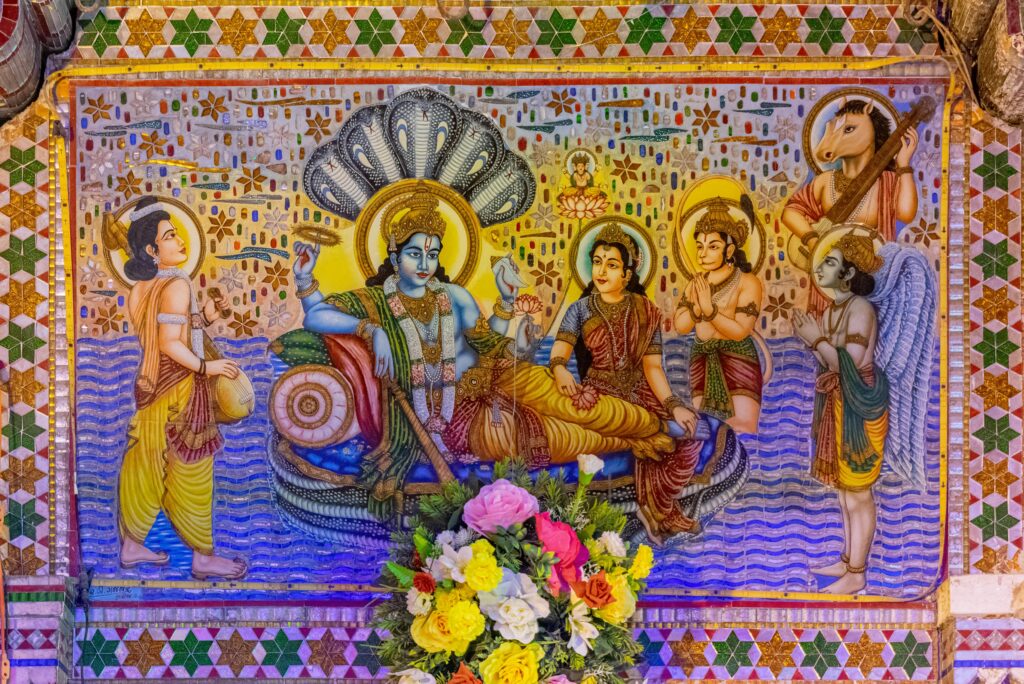
In India, we find another parallel in blue-skinned Krishna, one of the most beloved avatars of the Hindu god Vishnu.
While Krishna is male, again, he is often depicted with feminine traits, and is known for transcending traditional gender boundaries.
According to my teacher, Storm Faerywolf, Victor Anderson used a statue of Krishna to represent the Blue God — further proof of these deities’ links.
The Peacock Lord
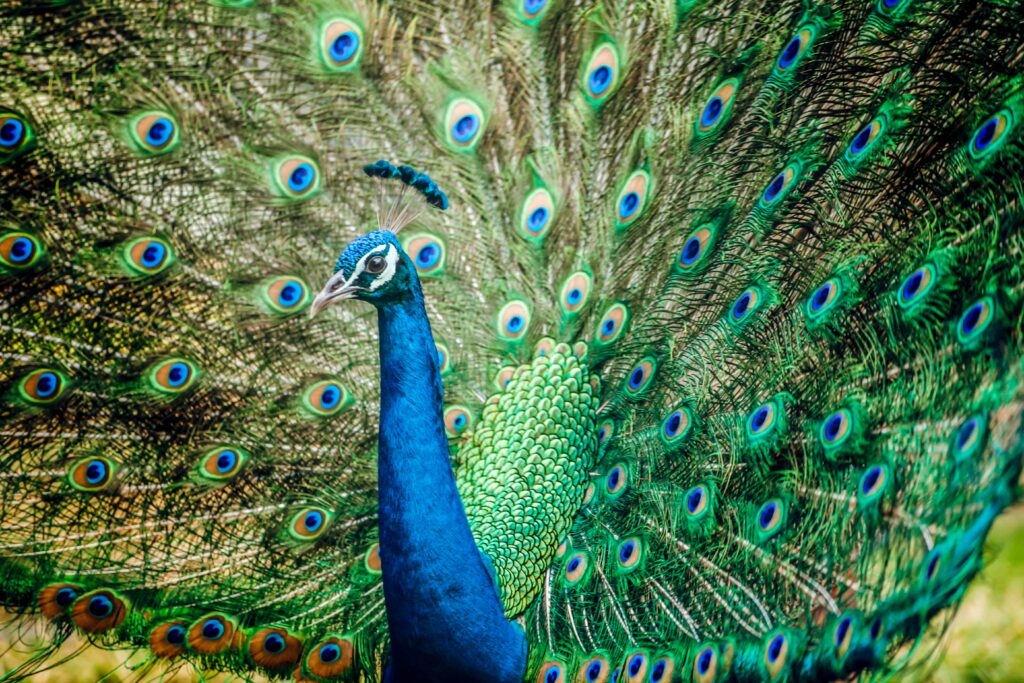
Like many other Feri deities, the Blue God also has different aspects. Perhaps the most famous of these is Tawusi Melek, or Melek Taus, the Yazidi Peacock Angel.
In Yazidism, the Supreme Divine Being is said to have created seven holy angels, who later became the custodians of creation. Melek Taus was the first angel to be formed by the Creator, and was tasked with being the leader of the group.
As the caretaker of our planet, Melek Taus is often referred to as the “Lord of this World.” He is said to be responsible for everything that happens — both good and bad.
In spite of this, the Yazidi believe that Melek Taus is a fundamentally benevolent being. He is also seen as something of a savior, having extinguished the fires of hell with his own tears.
In Evolutionary Witchcraft, author Thorn Coyle states, “Melek Taus is that which we fear within ourselves — the darkness and conflict, the glory and beauty — all the things we must face to be whole.”
As the lord of everything in our world, the Peacock Angel is well-acquainted with the depth and breadth of our humanity. He can help us to make peace with our paradoxes and contradictions, through greater self-awareness and integration.
Calling on the Blue God
If, after reading this article, you feel drawn to the Blue God, you might consider calling on him.
To create an altar in his honor, consider incorporating some or all of the following elements:
- Silk, or other sensuous fabrics
- Images or statues of peacocks; peacock feathers
- A beautiful hand fan
- Rainbow-colored items; rainbows
- Blue candles
Before making your invocation, start by grounding and aligning your souls (if aren’t familiar with these practices, check out this article).
In this altered state of awareness, visualize yourself in a beautiful garden. It is spring, and flowers are blooming all around you. You hear the rush of a fountain, close by.
Holding this visualization, begin to sing the following invocation:
Blue God,
Winged Serpent,
Living Rainbow,
Lord of the Painted Fan!
Notice how your body feels as you sing the invocation. Do you notice a tingling, or a sense of heat? Your skin might suddenly feel sensitive, or you might even feel as if you are glowing.
Feel and see the Blue God materialize before you. What form does he take? If you struggle to perceive him, don’t worry. Simply imagine what he might look like standing before you.
As you look into the Blue God’s eyes, notice what you feel. Is there anything you wish to tell him? Speak your words aloud, knowing he will hear you. Be attentive to his response.
Alternatively, you may sit silently before him, simply paying attention to what emerges. Stay in this space for however long you’d like, enjoying the beauty of the Blue God and the garden . . .
When you begin to feel that the encounter is coming to a close, look into your left hand. You realize that you have brought a gift with you for the Blue God. What is it?
As you give your gift to him, express gratitude for the experience, and any wisdom or healing he may have shared with you.
As you open your eyes, you bring back your memories of the encounter with you, and write them in your journal.